

Marriage customs in Himachal Pradesh show the state's cultural variety very clearly. Marriage here is both a religious sacrament and a social institution: Vedic rituals form the base of many weddings, while tribal and regional communities follow customs of their own. This page explains the key facts in simple words for HPAS, HP Allied Services, Naib Tehsildar, Patwari and other HPPSC and HPRCA exams.
It is a short version of the chapter "Marriage Customs in Himachal Pradesh" (Unit 5, Chapter 2) from Raman Academy's Himachal Pradesh General Studies book. You get the introduction, the key facts and a summary table here. The full community-wise tables and all wedding rituals are in the book.
On this page
Pre-Wedding Customs
A marriage traditionally begins with matchmaking and betrothal. Marriage mediators, known by names such as Roovary, Dhamu, Mazomi and Rivara, help the two families negotiate. Next comes Dheri, a token amount paid by the groom's family to the bride's father. It helps meet wedding expenses and marks formal acceptance of the proposal.
Betrothal then confirms the alliance. Among upper castes it is called Barni, where a priest matches horoscopes and fixes the date, while among middle and lower castes it is Sotha or Sagai, with an exchange of ornaments and coins. Other rituals before the wedding include Tika, worship of the family deity (Kul Devta Puja), Haldi and Mehendi, and Mama Swagat, in which the bride's maternal uncle is welcomed and honoured.
Types of Marriage in Himachal Pradesh
The book's community-wise tables show several forms of marriage. The seven to remember are:
- Arranged marriage – for example, Janekang in Kinnaur and Biyah among the Khasas
- Love marriage by elopement – for example, Rusa-te-Byah among the Swanglas
- Marriage by capture – for example, Pith Chuk among the Pangwals
- Exchange marriage – Batta-Satta or Atta-ka-Nata, where two families exchange daughters or sisters
- Marriage by service – Ghar Jawantri, where the groom works in the bride's household for years
- Widow remarriage – for example, Karewa in the Shimla Hills, where a widow marries her husband's brother
- Polyandry – one woman with more than one husband
Batta-Satta is described in the book as one of the most important traditional marriage systems of the state.
Polyandry in Himachal Pradesh
Polyandry is a marriage system in which one woman has more than one husband. Polyandry in Himachal Pradesh was historically practised in Kinnaur, Lahaul-Spiti and parts of Chamba and Sirmaur.
Kinnaur Marriage and Gaddi Marriage Customs
Kinnauras
Kinnaur marriage customs include arranged, love, capture and deity-approved forms. Janekang is the most common and legal arranged marriage. Under Anakang, the consent of the village deity is taken before the marriage, and Masore is the "milk price" paid to the bride's mother.
Gaddis
Gaddi marriage customs include formal, elopement, service, exchange and widow-remarriage forms. The best-known is Jhind Phuk, an elopement marriage in which the couple walks around burning bushwood. Dan Pun is the formal marriage, and Balu Jhanjhrara is the marriage of a widow to her husband's brother.
Marriage Customs in Himachal Pradesh: Summary Table
| Term | Community / area | Meaning |
|---|---|---|
| Dheri | General | Token amount for wedding expenses, not bride-price |
| Barni | Upper castes | Betrothal with horoscope matching |
| Batta-Satta | Several hill communities | Exchange marriage |
| Janekang | Kinnaur | Most common arranged marriage |
| Anakang | Kinnaur | Village deity's consent |
| Jhind Phuk | Gaddi | Bush-burning elopement marriage |
| Ghar Jawantri | Gaddi | Marriage by service |
| Rusa-te-Byah | Swangla (Pattan Valley) | Love marriage by elopement |
| Karewa | Shimla Hills | Widow marries husband's brother |
What the Full Chapter in the Book Adds
This page covers only the main points on marriage customs in Himachal Pradesh. The book chapter also gives:
- All regional forms of betrothal, including Chamba, Mandi and Kinnaur
- Wedding-day and post-wedding rituals
- A chart of the major types of marriage and notes on polyandry
- Full marriage tables for the Kinnauras, Swanglas, Gaddis, Pangwals, Lahaulas, Khasas and Jads
- Regional variants from Sirmaur and Kullu
- Special wedding terms such as bride-price customs and wedding songs
Practise MCQs on Marriage Customs
Test yourself with our free online quizzes:
- Birth, Marriage and Kinship Traditions MCQs
- Society and Social Customs MCQs
- Socio-Cultural Aspects of Castes and Tribes MCQs
Read the previous chapter on the culture of Himachal Pradesh and birth customs, or open the Himachal Pradesh MCQ hub for every topic. For tribal welfare and data, visit the Ministry of Tribal Affairs.
FAQs on Marriage Customs in Himachal Pradesh
What are the marriage customs in Himachal Pradesh? (Himachal mein shadiyan kaise hoti hain?)
A marriage usually starts with matchmaking through mediators, then Dheri and betrothal, followed by rituals such as Tika, Kul Devta Puja, Haldi, Mehendi and Mama Swagat. Vedic rites form the base, but tribal areas have their own customs.
What are the different types of marriage practised in Himachal Pradesh?
Arranged marriage, love marriage by elopement, marriage by capture, exchange marriage (Batta-Satta), marriage by service (Ghar Jawantri), widow remarriage and polyandry.
Where was polyandry practised in Himachal Pradesh?
Historically in Kinnaur, Lahaul-Spiti and parts of Chamba and Sirmaur. Polyandry means one woman has more than one husband.
What is Batta-Satta marriage?
An exchange marriage in which two families exchange daughters or sisters. It is also called Atta-ka-Nata.
Is Dheri a bride-price?
No. Dheri is a token amount paid by the groom's family to the bride's father to help with wedding expenses and to mark acceptance of the proposal.
What is Jhind Phuk in Gaddi marriage?
Jhind Phuk (or Jarar Phuk) is a Gaddi elopement marriage in which the couple walks around burning bushwood.
What is Janekang in Kinnaur marriage?
Janekang is the most common and legal form of arranged marriage among the Kinnauras.
Himachali shadi mein Mama Swagat kya hai? (What is Mama Swagat?)
Mama Swagat is a pre-wedding ritual in which the bride's maternal uncle is welcomed and honoured.
What is Karewa?
Karewa is a form of marriage in the Shimla Hills in which a widow marries her husband's brother.
Get the Complete Himachal Pradesh GK Book
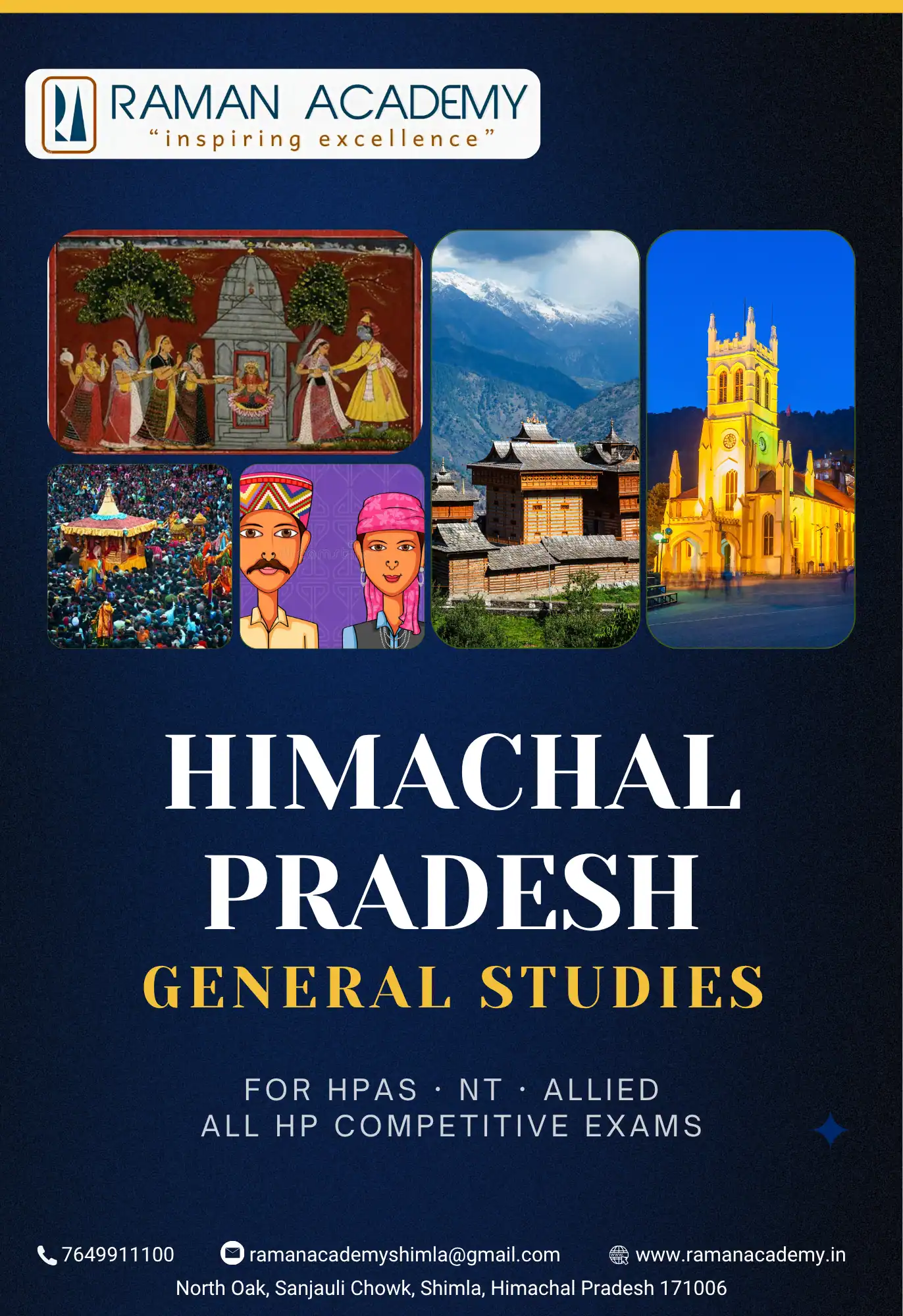
This page gives you about a quarter of the marriage customs chapter. The book has the full chapter with every betrothal form, wedding-day and post-wedding rituals, all the community-wise marriage tables and the special wedding terms, plus every other HP GK topic.
Buy the Himachal Pradesh General Studies Book
