

Himachal Pradesh is often called the "Land of Fairs and Festivals". The fairs of Himachal Pradesh are held all year round in connection with local deities, farming, trade, pilgrimage and the change of seasons. Besides keeping folk traditions alive, they promote trade, tourism and contact between regions. This page explains the key facts in simple words for HPAS, HP Allied Services, Naib Tehsildar, Patwari and other HPPSC and HPRCA exams.
It is a short version of the chapter "Fairs of Himachal Pradesh" (Unit 5, Chapter 11) from Raman Academy's Himachal Pradesh General Studies book. You get the introduction, the key facts and a summary table here. The district-wise fair tables are in the book.
On this page
Types of Fairs and How to Remember Them
The book classifies Himachali fairs as religious, trade, seasonal and state or national fairs. Its tip for prelims is to remember each fair through one chain: district or place → month → deity or theme → level → unique feature.
International Fairs of Himachal Pradesh
- Kullu Dussehra (Kullu): seven days from Vijayadashami at Dhalpur Maidan. It traces its origin to 1651, when Raja Jagat Singh installed the idol of Lord Raghunath, and it ends with the symbolic burning of Lanka on the Beas bank.
- Mandi Shivratri (Mandi): seven days at Paddal Ground, honouring Lord Shiva (Bhootnath) and Lord Madho Rai. It was started by Raja Ajber Sen in 1527, and Madho Rai leads the Jaleb procession.
- Minjar fair (Chamba): in July–August, linked with the worship of Varuna and thanks for a good harvest. Devotees wear a Minjar – a silk tassel like a maize flower – and a procession goes from Akhand Chandi Palace to the Ravi.
- Lavi fair (Rampur-Bushahr, Shimla): in November, linked with Raja Kehri Singh and the Bushahr–Tibet trade treaty; a historic market for wool and pashmina.
- Renuka fair (Sirmaur): on Kartik Shukla Ekadashi, about 10 days after Diwali, marking the annual meeting of Goddess Renuka and Lord Parshuram.
State and Regional Fairs
The Nalwari fair of Bilaspur is a state-level cattle fair started in 1889 by W. Goldstein, Superintendent of the Shimla Hill States, to encourage cattle breeding. It is known as the "Cattle Fair of the Lower Hills", in contrast with the Lavi fair of the upper hills. The Sujanpur Holi fair of Hamirpur, started by Raja Sansar Chand, is a national-level fair, and the Suhi fair of Chamba, held in memory of Rani Sunaina Devi, is known as a women's fair. In Lahaul, the Sissu, Gemur and Gondhla monastic fairs feature Chham mask dances.
Fairs of Himachal Pradesh: Summary Table
| Fair | District | Month | Remember for |
|---|---|---|---|
| Kullu Dussehra | Kullu | Oct | International; Lord Raghunath |
| Mandi Shivratri | Mandi | Feb–Mar | International; Jaleb procession |
| Minjar | Chamba | Jul–Aug | International; Varuna, Ravi |
| Lavi | Shimla (Rampur) | Nov | International; wool trade |
| Renuka | Sirmaur | After Diwali | International; Renuka–Parshuram |
| Nalwari | Bilaspur | Mar | State-level cattle fair, 1889 |
| Sujanpur Holi | Hamirpur | Mar | National; Raja Sansar Chand |
| Suhi | Chamba | Apr | Women's fair; Rani Sunaina |
What the Full Chapter in the Book Adds
This page covers only the main points on the fairs of Himachal Pradesh. The book chapter also gives:
- Full details of each international and state fair, including dates and rituals
- Naina Devi, Rewalsar, Gugga, Hamir Utsav and other regional fairs
- The Buddhist monastic fairs of Lahaul with their months
- District-wise fair tables for all twelve districts, from Kangra to Lahaul–Spiti
Practise MCQs on Fairs and Festivals
Test yourself with our free online quizzes:
- Fairs and Festivals MCQs
- District-wise Festivals and Cultural Significance MCQs
- Religious and Cultural Tourism Sites MCQs
Read the previous chapter on the festivals of Himachal Pradesh, or open the Himachal Pradesh MCQ hub for every topic. For fair dates and travel information, visit the Incredible India page on Himachal Pradesh.
FAQs on the Fairs of Himachal Pradesh
What are the famous fairs of Himachal Pradesh? (Himachal Pradesh ke pramukh mele kaun se hain?)
Kullu Dussehra, Mandi Shivratri, Minjar, Lavi and Renuka are the best known, along with the Nalwari, Sujanpur Holi and Suhi fairs.
How many international fairs are there in Himachal Pradesh?
The book gives international level to five fairs: Kullu Dussehra, Mandi Shivratri, Minjar (Chamba), Lavi (Rampur) and Renuka (Sirmaur).
Who started the Mandi Shivratri fair?
Raja Ajber Sen started it in 1527, and Raja Suraj Sen gave it its later form in 1648.
Why is the Minjar fair celebrated?
It is linked with the worship of Varuna and thanksgiving for a good harvest. Offerings, including the Minjar tassel, are made into the Ravi.
Where is the Lavi fair held and why is it famous?
At Rampur-Bushahr in Shimla district. It is famous as a historic trade fair for wool and pashmina, linked with the Bushahr–Tibet trade treaty.
Who started the Nalwari fair?
W. Goldstein, Superintendent of the Shimla Hill States, in 1889, to encourage cattle breeding.
When is the Renuka fair held?
On Kartik Shukla Ekadashi, about 10 days after Diwali, at Renuka in Sirmaur.
Which fair of Himachal Pradesh is known as a women's fair?
The Suhi fair of Chamba, held in memory of Rani Sunaina Devi.
When did Kullu Dussehra start?
The fair traces its origin to 1651, when Raja Jagat Singh installed the idol of Lord Raghunath, brought from Ayodhya.
Get the Complete Himachal Pradesh GK Book
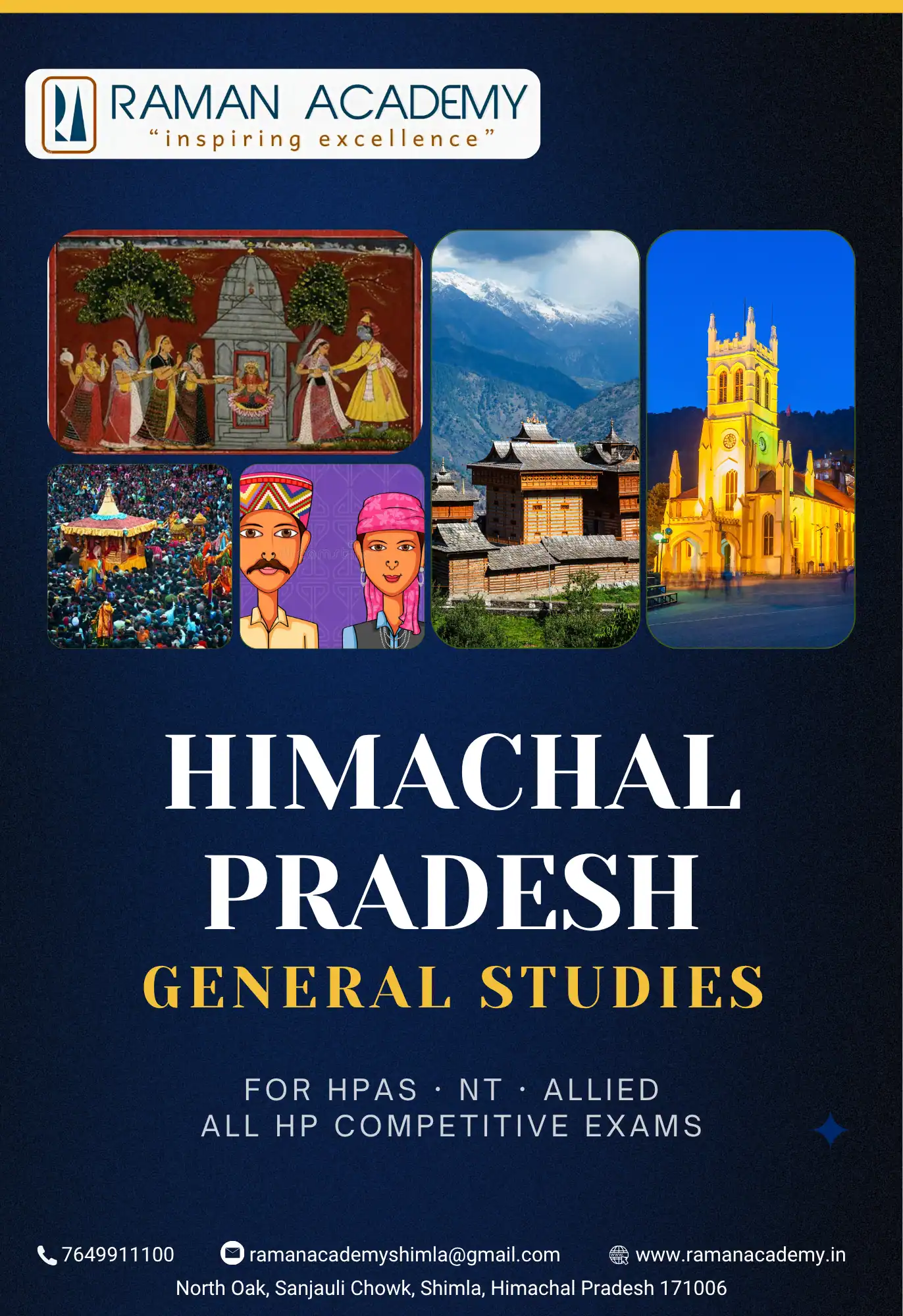
This page gives you about a quarter of the fairs chapter. The book has the full chapter with every international and state fair, regional and monastic fairs and district-wise fair tables for all twelve districts, plus every other HP GK topic.
Buy the Himachal Pradesh General Studies Book
