

Death rituals in Himachal Pradesh bring together Hindu, Buddhist, tribal and Bon traditions, shaped by the ecological conditions of the Himalayas. The differences are clearest in funeral rites and in the ways the dead are laid to rest. This page explains the key facts in simple words for HPAS, HP Allied Services, Naib Tehsildar, Patwari and other HPPSC and HPRCA exams.
It is a short version of the chapter "Funeral Customs in Himachal Pradesh" (Unit 5, Chapter 4) from Raman Academy's Himachal Pradesh General Studies book. You get the introduction, the key facts and a summary table here. The step-by-step rituals and all regional customs are in the book.
On this page
Why Funeral Customs in Himachal Pradesh Differ
The book gives four reasons:
- Ecology: high altitude, frozen ground and a shortage of firewood
- Religion: Hindu, Buddhist and Bon traditions
- Community: shared mourning and community participation
- Belief: a safe journey for the soul and continuity with the ancestors
Death Rituals in Himachal Pradesh: The Funeral
Some rituals begin at the moment of death – for example, the head is traditionally turned towards the north. The body is then bathed, anointed and placed on a bier for the procession.
On the way, the procession makes a halt midway called Adhmargi, where the family offers prayers before moving on to the cremation or burial ground. At home, cooking is traditionally avoided until the body has left the house. This reflects Ashaucha, the period of ritual impurity.
Post-Funeral Rites
These rites are performed for the peace of the departed soul, the purification of the home and continuity with the ancestors.
- Pind Daan: rice balls (pind), sesame seeds and curd are offered to the ancestors
- Tenth-day rites: washing clothes, reading the Garuda Purana and purifying the house
- Sapindi Karma: performed mainly after an untimely death, to unite the soul with the ancestral spirits (Pitrs)
Funeral Customs of Kinnaur, Lahaul and Spiti
In the trans-Himalayan Buddhist belt, funerals show the influence of Tibetan Buddhism, local tribal beliefs and the Bon tradition. A Lama may pray before cremation or burial, and in some traditions prayers continue for 49 days (7 weeks). In Kinnaur, Chholya is the ritual of the third day after death, and in Lahaul, during Fuhan, a Lama whispers sacred mantras into the ear of the deceased to guide the soul.
Funeral Customs of Himachal Pradesh: Summary Table
| Custom | Area | Meaning |
|---|---|---|
| Adhmargi | General | Midway halt of the funeral procession |
| Ashaucha | General | Period of ritual impurity after death |
| Pind Daan | General | Rice balls, sesame and curd offered to ancestors |
| Tenth-day rites | General | Garuda Purana reading, house purification |
| Sapindi Karma | General | Rite after an untimely death |
| Chholya | Kinnaur | Third-day ritual |
| Fuhan | Lahaul | Lama whispers mantras to guide the soul |
What the Full Chapter in the Book Adds
This page covers only the main points on funeral customs in Himachal Pradesh. The book chapter also gives:
- All the rituals performed at the time of death and their meaning
- Every step in preparing the body and the offerings made at Adhmargi
- More regional customs of Kinnaur and Spiti, including the annual memorial and the role of the astrologer-priest
- The methods of disposal of the dead in different regions
Practise MCQs on Customs and Traditions
Test yourself with our free online quizzes:
Read the previous chapter on divorce and remarriage in Himachal Pradesh, or open the Himachal Pradesh MCQ hub for every topic. For official information on the state, visit the Himachal Pradesh government portal.
FAQs on Death Rituals in Himachal Pradesh
What are the main death rituals in Himachal Pradesh? (Himachal mein mrityu ke baad kaun si rasmein hoti hain?)
The main ones are the Adhmargi halt during the funeral procession, Ashaucha (ritual impurity), Pind Daan, the tenth-day rites and, after an untimely death, Sapindi Karma. Buddhist areas follow Lama-led rites.
What is Adhmargi?
Adhmargi is a halt midway during the funeral procession, where family members offer prayers before going on to the cremation or burial ground.
What is Ashaucha?
Ashaucha is the period of ritual impurity after a death. Cooking inside the house is traditionally avoided until the body leaves.
What is offered in Pind Daan?
Rice balls (pind), sesame seeds and curd are offered to the ancestors for the peaceful onward journey of the soul.
What is done on the tenth day after death?
Clothes are washed, the Garuda Purana is recited and the house is purified.
Sapindi Karma kya hota hai? (What is Sapindi Karma?)
It is a rite performed mainly after an untimely death, such as an accident or the death of a young person. It symbolically unites the soul with the ancestral spirits (Pitrs).
Why do funeral customs differ across Himachal Pradesh?
Because of ecology (high altitude, frozen ground, little firewood), religion (Hindu, Buddhist and Bon traditions), community practice and beliefs about the soul's journey.
How long are prayers said after death in the Buddhist areas?
In some traditions of Kinnaur, Lahaul and Spiti, prayers may continue for 49 days (7 weeks).
What is Chholya in Kinnaur?
Chholya is the ritual performed on the third day after death in Kinnaur.
Get the Complete Himachal Pradesh GK Book
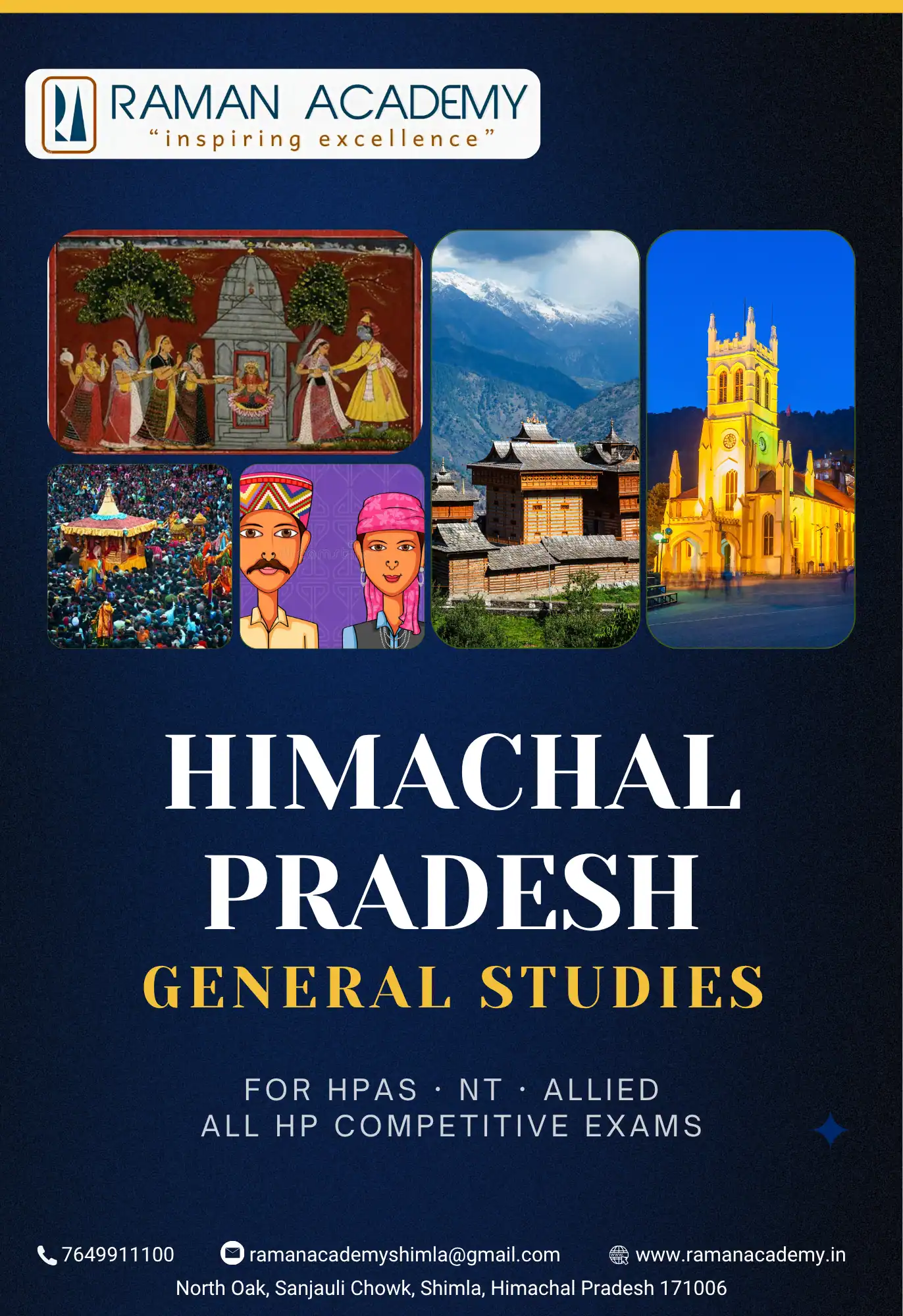
This page gives you about a quarter of the funeral customs chapter. The book has the full chapter with the rituals performed at death, preparation of the body, all post-funeral rites, every regional custom of Kinnaur, Lahaul and Spiti and the methods of disposal of the dead, plus every other HP GK topic.
Buy the Himachal Pradesh General Studies Book
