

1. National Blockchain Framework (NBF) – Science & Technolog
Why in News?
The National Blockchain Framework (NBF) was officially launched in September 2024 by the Ministry of Electronics and Information Technology (MeitY) with a budget of ₹64.76 crore.
Its goal is to establish a unified, secure, and interoperable blockchain infrastructure to improve transparency, trust, and service delivery in governance.
What is the NBF?
A national-level architecture that allows ministries and state governments to build and deploy Blockchain-as-a-Service (BaaS) solutions in sectors like land records, pharmaceuticals, judiciary, and finance.
Key Components of NBF
| Component | Purpose |
|---|---|
| Vishvasya Blockchain Stack | Modular infrastructure with open APIs for building governance-grade blockchain apps |
| NBFLite | Testing environment for startups and developers, includes pre-coded smart contract templates |
| Praamaanik App | Mobile-based verification and authentication tool to improve digital trust and app security |
| National Blockchain Portal | Centralized interface offering standards, use cases, and policies to promote blockchain adoption |
Technology Overview
| Feature | Details |
|---|---|
| Permissioned Blockchain | Controlled access, enhances data security and trust for public systems |
| Interoperable Systems | Enables cross-sector and cross-departmental integration |
| Smart Contracts | Allow automated, tamper-proof, rule-based digital workflows |
| Immutable Ledger | Ensures data cannot be tampered with after entry, enhancing audit and transparency |
Key Applications in Governance
| Use Case | Impact |
|---|---|
| Certificate & Document Chain | Secures govt-issued records (education, birth/death certificates); 34+ crore verifications done |
| Property Chain | Transparent land transaction records, reduces disputes and fraud |
| Judiciary Chain | Immutable tracking of judicial documents, e-delivery of court summons |
| ICJS Integration | Links police, court, and prison records for streamlined criminal justice system |
| Aushada Chain (Logistics) | Tracks pharma supply chains to prevent fake drugs |
| Digital Rupee Pilot (RBI) | Uses blockchain for secure, traceable CBDC transactions |
Significance for India
-
Promotes digital trust and data integrity in government transactions
-
Encourages innovation and local blockchain startups
-
Helps in fraud prevention, particularly in land records, documents, and pharma
-
Advances cyber-resilient governance in line with Digital India 2.0
Exam Connect – Possible Questions
Prelims
1. Which of the following statements is/are true about the National Blockchain Framework (NBF)?
1.It is based on a permissionless blockchain model.
2.It enables Blockchain-as-a-Service (BaaS) for government departments.
3.The Vishvasya Stack is part of its core architecture.
Options:
A. 1 only
B. 2 and 3 only
C. 1 and 2 only
D. 1, 2, and 3
Answer: B. 2 and 3 only
2. What is the main purpose of the “Praamaanik” app under the NBF?
A. Financial transaction monitoring
B. Digital authentication and app verification
C. AI-powered judicial analysis
D. Digital payment interface
Answer: B. Digital authentication and app verification
Mains
1. “Blockchain technology can redefine trust and transparency in Indian governance.” Discuss the features and significance of the National Blockchain Framework in this context.
2. Examine the challenges in implementing blockchain solutions in public administration. What role can the National Blockchain Framework play in addressing these?
2. Deployment of Network Survey Vehicles (NSVs) by NHAI – Science and Technology

Why in News?
The National Highways Authority of India (NHAI) has announced the deployment of Network Survey Vehicles (NSVs) across 23 states to collect high-resolution, real-time data for systematic monitoring and maintenance of National Highways.
What are Network Survey Vehicles (NSVs)?
NSVs are high-tech, mobile infrastructure assessment tools equipped with advanced sensors, cameras, GPS systems, and data acquisition equipment.
They perform automated, non-invasive surveys of road infrastructure, identifying defects and design inconsistencies.
Key Components and Features
| Component | Function |
|---|---|
| GPS | Precise geo-location mapping of road segments |
| High-Resolution Cameras | Visual capture of cracks, potholes, edge failures |
| Laser Profilers | Detect surface undulations, rutting, and roughness |
| Distance Measuring Instrument (DMI) | Accurate length measurement of surveyed roads |
| Inertial Measurement Unit (IMU) | Tracks orientation and vibration for detecting structural anomalies |
| Video Image Processing (VIP) | AI-assisted defect detection in road surfaces |
Types of Defects Detected (13 in total)
-
Longitudinal and transverse cracks
-
Ravelling (erosion of surface)
-
Potholes and edge breaks
-
Surface roughness and rutting
-
Depressions, bleeding, and shoving
-
Pavement and shoulder damage
-
Drainage issues
Operational Details
| Feature | Details |
|---|---|
| Geographical Spread | NSVs deployed in 23 Indian states |
| Project Coverage | All 2-, 4-, 6-, and 8-lane highway projects |
| Survey Frequency | Initial baseline survey + every 6 months |
| Data Storage | Uploaded to NHAI’s AI-powered portal – Data Lake |
| Data Use | Enables predictive maintenance, budgeting, and better asset management |
Significance and Benefits
For Road Infrastructure
-
Proactive and data-driven maintenance
-
Early detection reduces repair costs and avoids major disruptions
-
Enhances service life of pavements
For Road Safety
-
Reduces accident risk due to sudden potholes or road cracks
-
Improves signage and drainage assessment
For Governance and Planning
-
Enables AI-based decision-making
-
Assists in tender preparation, project evaluation, and policy formulation
Exam Connect – Possible Questions
Prelims
1. The primary objective of deploying Network Survey Vehicles (NSVs) by NHAI is:
A. Conduct real-time traffic surveillance
B. Monitor forest road encroachments
C. Automate toll collection on highways
D. Assess the condition and inventory of national highways
Answer: D. Assess the condition and inventory of national highways
2. Which of the following technologies is/are commonly integrated into Network Survey Vehicles (NSVs)?
1.GPS
2.Laser Profilers
3.Video Image Processing
4.Doppler Radar
Options:
A. 1 and 2 only
B. 2 and 3 only
C. 1, 2, and 3 only
D. All of the above
Answer: C. 1, 2, and 3 only
Mains
1. “India’s road infrastructure needs intelligent systems to ensure durability and safety.” Examine the role of Network Survey Vehicles in strengthening highway governance and infrastructure quality.
2. Discuss how AI-integrated survey technologies like NSVs can improve infrastructure planning in climate-sensitive regions like Himachal Pradesh.
3. National Unity Day (Rashtriya Ekta Diwas) – Polity
Why in News?
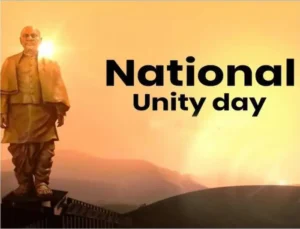
The Prime Minister of India will lead the National Unity Day celebrations at the Statue of Unity in Gujarat’s Narmada Valley on October 31, 2025, marking the 150th birth anniversary of Sardar Vallabhbhai Patel.
What is National Unity Day?
-
Observed on: 31st October every year
-
Started in: 2014 by the Government of India
-
Purpose:
-
To honor the legacy of Sardar Vallabhbhai Patel
-
To reaffirm India’s commitment to unity, integrity, and security
-
-
Celebrated through:
-
“Run for Unity” marathons
-
Unity pledges across government institutions, schools, and colleges
-
Sardar Vallabhbhai Patel: The Architect of Indian Unity
| Role | Contribution |
|---|---|
| Unifier of India | Integrated 560+ princely states into the Indian Union post-Independence |
| Deputy Prime Minister (1947–1950) | Managed Home Affairs, States, and Information & Broadcasting |
| Kheda Satyagraha (1918) | Worked alongside Gandhi to support farmers during famine |
| Bardoli Satyagraha (1928) | Led nonviolent resistance; earned the title ‘Sardar’ (Leader) |
| Municipal Reformer | As President of Ahmedabad Municipality (1924), improved civic infrastructure |
| Freedom Struggle Leader | Played a vital role in Civil Disobedience and Quit India Movement |
Statue of Unity
-
Location: Narmada Valley, Gujarat
-
Unveiled: 31st October 2018
-
Height: 182 metres – the tallest statue in the world
-
Symbolism: Represents national integration and Sardar Patel’s legacy
Why National Unity Day Matters
| Significance | Explanation |
|---|---|
| Nation-Building | Reminds citizens of the monumental task of political unification post-Independence |
| Constitutional Spirit | Reinforces values of unity in diversity, federalism, and territorial integrity |
| Civic Responsibility | Encourages youth to uphold unity amid rising polarisation and regionalism |
| Global Message | Projects India as a strong, diverse, and democratic nation |
Exam Connect – Possible Questions
Prelims
1. National Unity Day commemorates the contribution of:
A. Dr. B.R. Ambedkar
B. Mahatma Gandhi
C. Sardar Vallabhbhai Patel
D. Subhas Chandra Bose
Answer: C. Sardar Vallabhbhai Patel
2. Which of the following statements about the Statue of Unity is/are correct?
1.It is located in Gujarat’s Narmada Valley
2.It was inaugurated in 2018
3.It commemorates the life of Jawaharlal Nehru
Options:
A. 1 only
B. 1 and 2 only
C. 2 and 3 only
D. 1, 2, and 3
Answer: B. 1 and 2 only
Mains
1. “Sardar Vallabhbhai Patel’s role in integrating princely states laid the foundation of modern India.” Examine his contribution to India’s post-Independence political integration.
2. Discuss the significance of National Unity Day in contemporary India. How can such commemorations help in strengthening constitutional values and federal unity?
4. What is Leachate? – Environment
Why in News?
Environmentalists, wildlife activists, and local communities have petitioned the Union Ministry of Environment, Forest and Climate Change (MoEFCC) regarding the illegal discharge of untreated leachate into the Aravalli hills, raising alarm over the growing environmental and health risks from unregulated municipal solid waste (MSW) landfills.
What is Leachate?
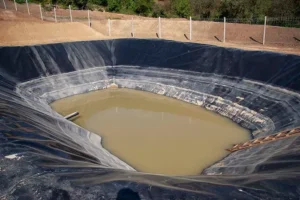
Leachate is the toxic liquid that forms at the base of landfills due to the breakdown of organic waste, infiltration of rainwater, and chemical processes. It carries high concentrations of pollutants and must be treated to avoid groundwater, soil, and surface water contamination.
How is Leachate Formed?
| Source | Process |
|---|---|
| Rainwater infiltration | Rain seeps into the landfill, dissolving contaminants |
| Biodegradation | Organic waste decomposes and releases liquids |
| Chemical reactions | Interactions between waste materials form complex pollutants |
Composition of Leachate
| Category | Examples |
|---|---|
| Organic matter | Ammonia, COD, BOD, volatile fatty acids |
| Inorganic compounds | Chlorides, sulfates, nitrates, bicarbonates |
| Heavy metals | Lead, mercury, cadmium, arsenic |
| Pathogens | Coliform bacteria, viruses, fungi |
Note: Composition varies with landfill age, waste type, weather, and moisture levels
Environmental & Health Hazards
-
Groundwater contamination (especially dangerous in unlined or open landfills)
-
Spread of pathogens into nearby ecosystems
-
Harm to wildlife and biodiversity, especially near protected areas like the Aravalis
-
Public health risks: cancers, birth defects, skin and respiratory disorders
-
Toxicity in soil, affecting agriculture and food safety
Regulatory Framework in India
| Regulation | Relevance |
|---|---|
| Solid Waste Management Rules, 2016 | Mandates leachate treatment before discharge |
| Water (Prevention & Control of Pollution) Act, 1974 | Penalizes water contamination from leachate |
| Environment (Protection) Act, 1986 | Empowers MoEFCC to act against ecological threats |
| CPCB Guidelines | Provide protocols for leachate monitoring and treatment |
Leachate Treatment Technologies
| Method | Description |
|---|---|
| Collection tanks & liners | Collect leachate using impermeable membranes |
| Biological treatment | Uses bacteria to break down organic matter |
| Physico-chemical treatment | Coagulation, flocculation, neutralization |
| Constructed wetlands | Nature-based filtering systems |
| Reverse osmosis | Removes dissolved solids for advanced treatment |
Case: Aravalis and the Leachate Crisis
-
The Aravalli Range is an ecologically sensitive zone crucial for:
-
Groundwater recharge
-
Biodiversity
-
Acting as a barrier against desertification
-
-
Illegal dumping and leachate discharge threaten:
-
Forest health and wildlife corridors
-
Water bodies and aquifers in NCR and Haryana
-
Livelihoods of tribal and rural communities
-
Exam Connect – Possible Questions
Prelims
1. What is “leachate” in the context of solid waste management?
A. A type of pesticide used to reduce landfill pests
B. A nutrient-rich organic compost made from wet waste
C. A toxic liquid formed from decomposing waste in landfills
D. A chemical additive used in landfill lining
Answer: C. A toxic liquid formed from decomposing waste in landfills
2. Which of the following pollutants are commonly found in landfill leachate?
1.Heavy metals
2.Organic compounds
3.Pathogenic bacteria
Options:
A. 1 and 2 only
B. 2 and 3 only
C. 1 and 3 only
D. 1, 2, and 3
Answer: D. 1, 2, and 3
Mains
1. “Leachate from municipal landfills poses one of the most serious environmental risks in urban India.” Discuss the causes, impacts, and policy measures for effective leachate management.
2. Examine the challenges of solid waste management in ecologically sensitive zones like the Aravallis and Himachal Pradesh. Suggest sustainable waste handling and leachate mitigation strategies.
5. The Mirage of Port-Led Development in Great Nicobar – Economy
Why in News?
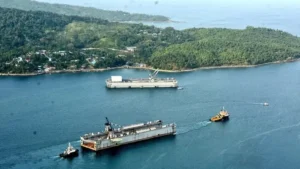
A proposed transshipment port at Galathea Bay in Great Nicobar is being promoted as part of India’s maritime resurgence. However, multiple economists, environmentalists, and logistics experts have raised serious concerns about its economic viability, logistical feasibility, and strategic redundancy.
Project Overview: Galathea Bay Port
-
Goal: To establish a mega transshipment hub to compete with ports like Singapore, Colombo, and Klang
-
Promoted by: NITI Aayog and Ministry of Ports, Shipping and Waterways
-
Total Project Area: Approx. 166 sq. km (includes airport, township, and container port)
-
Location: Great Nicobar Island, over 1,200 km from Indian mainland
Key Issues & Critical Analysis
Flawed Assumption of “Build It and They Will Come”
-
Modern port success depends not just on physical infrastructure but also on:
-
Established cargo bases
-
Carrier loyalty
-
Efficient hinterland connectivity
-
-
Example: Vallarpadam Port (Kerala) received heavy investment but remains underutilized.
Lack of Industrial Hinterland
-
Great Nicobar lacks:
-
Manufacturing zones
-
Logistics hubs
-
Stable EXIM cargo flow
-
-
This forces reliance on feeder services, increasing operational costs and reducing competitiveness.
Geographical Isolation
-
Located far from the Indian mainland and away from existing economic corridors.
-
Risk of becoming a “geopolitical outpost” rather than a viable trade hub.
Strategic Redundancy
-
The INS Baaz naval base already provides military surveillance in the region.
-
Mixing military and commercial use poses:
-
Security risks
-
Operational conflicts
-
Compromises in civil-military coordination
-
Environmental and Tribal Impact
-
Project area overlaps with biodiversity-rich tropical forests and is home to the Shompen tribe, a Particularly Vulnerable Tribal Group (PVTG).
-
Risk of ecological damage, displacement, and violation of environmental laws.
Why Port-Led Development Can Fail Without Ecosystem Support
| Success Factors | Great Nicobar’s Status |
|---|---|
| Cargo Base | Absent |
| Industrial Hinterland | None nearby |
| Carrier Alliances | Not established |
| Road/Rail Connectivity | Isolated |
| Logistics Cost Efficiency | High due to remoteness |
Way Forward / Recommendations
-
Focus on upgrading existing ports with underutilized capacity like Vishakhapatnam, Cochin, and JNPT
-
Enhance coastal connectivity, not just port infrastructure
-
Avoid mega projects in ecologically sensitive and strategically delicate regions
-
Prioritize environmental clearance, public consultation, and economic viability studies
Exam Connect – Possible Questions
Prelims
1. The proposed transshipment port at Galathea Bay is located in:
A. Lakshadweep
B. Andaman Island
C. Great Nicobar Island
D. Katchatheevu Island
Answer: C. Great Nicobar Island
2. Which of the following is a key requirement for a successful transshipment port?
1.Industrial hinterland
2.Strategic location on shipping lanes
3.High-volume cargo base
4.Coastal tourism facilities
Options:
A. 1, 2, and 3 only
B. 2 and 4 only
C. 1 and 3 only
D. All of the above
Answer: A. 1, 2, and 3 only
Mains
1. “Port-led development is not just about infrastructure but about building a complete ecosystem.” Critically analyze this statement in the context of the proposed Galathea Bay Port in Great Nicobar.
2. Evaluate the economic, ecological, and strategic concerns surrounding the development of large-scale infrastructure in ecologically sensitive zones like Great Nicobar.
6. International Convention against Doping in Sport – International Relations

Why in News?
India has been re-elected as Vice-Chairperson of the Bureau for the Asia-Pacific Region (Group IV) during the 10th Session of the Conference of Parties (COP10) to the International Convention against Doping in Sport, reflecting India’s growing role in global sports governance and commitment to clean sport ethics.
About the Convention
| Feature | Details |
|---|---|
| Objective | To combat doping in sport through international cooperation and harmonization of national anti-doping policies |
| Adopted by | UNESCO at its 33rd General Conference on 19 October 2005 |
| Came into Force | 1 February 2007 |
| Membership | 192 State Parties (UNESCO’s 2nd most ratified convention) |
| Monitoring Body | Conference of Parties (COP) – meets every 2 years to review implementation |
Key Features of the Convention
Legal Framework for Anti-Doping
-
Encourages states to align national laws with international anti-doping standards
-
Recognizes the World Anti-Doping Agency (WADA) as the global standard-setter
Positive Implementation Approach
-
Emphasizes capacity building over penalization
-
Supports states through guidance manuals, technical assistance, and training programs
Funding Mechanism: Anti-Doping Fund
-
Used to support awareness campaigns, especially in developing countries
-
Promotes research, education, and community-level advocacy against doping
India’s Role and Significance
-
India’s re-election to the Asia-Pacific Bureau reflects:
-
Active participation in global sports governance
-
Commitment to anti-doping norms
-
Growing credibility in organizing clean sporting events
-
-
Agencies involved:
-
National Anti-Doping Agency (NADA)
-
Sports Authority of India (SAI)
-
Ministry of Youth Affairs and Sports
-
Why Doping is a Global Concern
| Area | Implications |
|---|---|
| Health | Long-term physical and psychological damage to athletes |
| Integrity of Sport | Erodes public trust and the principle of fair competition |
| Legal | Triggers international disputes and disqualification in global tournaments |
| Global Image | Affects a country’s reputation in international sports |
India – Challenges and Way Forward
Challenges:
-
Limited testing capacity (though improving)
-
Lack of awareness at grassroots level
-
Influence of performance pressure on youth athletes
Way Forward:
-
Invest in WADA-accredited labs and transparent processes
-
Strengthen NADA’s independence and enforcement powers
-
Integrate anti-doping awareness into school and university sports programs
-
Promote clean sport campaigns in local languages
Exam Connect – Possible Questions
Prelims
1. The International Convention against Doping in Sport was adopted under the aegis of:
A. World Health Organization (WHO)
B. International Olympic Committee (IOC)
C. United Nations Educational, Scientific and Cultural Organization (UNESCO)
D. World Anti-Doping Agency (WADA)
Answer: C. UNESCO
2. Which of the following statements is/are true about the International Convention against Doping in Sport?
1.It is legally binding on all signatory states.
2.It recognizes WADA as the standard-setting body for anti-doping regulations.
3.India is not a signatory to the Convention.
Options:
A. 1 and 2 only
B. 2 and 3 only
C. 1 and 3 only
D. All three
Answer: A. 1 and 2 only
Mains
1. “India’s re-election to the Bureau of the International Convention against Doping in Sport reflects its growing stature in global sports diplomacy.” Discuss the significance of this development in the context of global and national anti-doping efforts.
2. Examine the challenges of enforcing anti-doping regulations in developing countries. How can international cooperation and treaties strengthen national frameworks?