
1. Kiru Hydroelectric Project – A Milestone in India’s Renewable Energy Infrastructure – Science & Technology
Why in News?
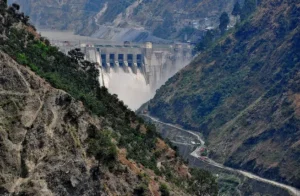
The Kiru Hydroelectric Project, a major run-of-river power project in Jammu and Kashmir, has completed 10 lakh cubic meters of dam concreting, nearing its final goal of 12 lakh cubic meters — marking a significant progress milestone.
Key Features of the Project:
| Feature | Details |
|---|---|
| Project Type | Run-of-River Hydroelectric Project |
| Installed Capacity | 624 Megawatts (MW) |
| Location | Kishtwar District, Jammu & Kashmir – over Chenab River |
| Dam Type & Height | Concrete Gravity Dam – 135 meters high |
| Powerhouse | Underground, housing 4 vertical Francis turbines (each 156 MW) |
| Status | 10/12 lakh cubic meters of dam concreting completed |
| Significance | Will enhance power supply reliability in Northern India |
-
Positioning: The Kiru project is situated between:
-
Kirthai II Project (Upstream)
-
Kwar Project (Downstream)
-
-
Nearby Villages: Patharnakki and Kiru
Project Developers:
The project is developed under a Joint Venture model:
| Entity | Share (%) |
|---|---|
| National Hydroelectric Power Corporation (NHPC) | 49% |
| J&K State Power Development Corporation (JKSPDC) | 49% |
| Power Trading Corporation (PTC) | 2% |
The joint venture operates under the umbrella of Chenab Valley Power Projects (CVPP).
Importance of the Project:
-
Energy Security: Will help stabilize energy supply in Northern Grid.
-
Sustainability: Being a run-of-river project, it has less environmental impact compared to large reservoir-based dams.
-
Regional Development: Expected to generate local employment, infrastructure, and socio-economic upliftment in Kishtwar region.
-
Hydropower Push: Aligns with India’s long-term low-carbon growth strategy and Nationally Determined Contributions (NDCs) under the Paris Agreement.
Exam Connect – Possible Questions
Prelims
1. The Kiru Hydroelectric Project is being constructed on which river?
A. Ravi
B. Jhelum
C. Chenab
D. Beas
Answer: C. Chenab
2. Which of the following statements is/are correct regarding the Kiru Hydroelectric Project?
1.It is a reservoir-based hydroelectric project.
2.It is developed by a joint venture involving NHPC and JKSPDC.
A. 1 only
B. 2 only
C. Both 1 and 2
D. Neither 1 nor 2
Answer: B. 2 only
Mains
1. Discuss the significance of the Kiru Hydroelectric Project in strengthening India’s renewable energy capacity and regional development in Jammu & Kashmir.
2. Hydropower projects in the Himalayan region pose both opportunities and challenges. Analyze this statement in the context of run-of-river projects like Kiru.
2. India’s Ethanol Revolution: Grain-Based Ethanol Overtakes Sugarcane – Economy
Why in News?
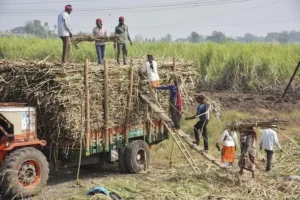
India’s ethanol blending programme has undergone a significant transformation — for the first time, grain-based ethanol, especially from maize, has surpassed sugarcane-based production. This marks a pivotal shift in India’s biofuel policy.
Key Takeaways:
| Aspect | Details |
|---|---|
| Major Shift | Grain-based ethanol has overtaken sugarcane-based ethanol production |
| Leading Crop | Maize is now the dominant grain used for ethanol |
| Investment | Over ₹40,000 crore invested in grain-based distilleries |
| 2024-25 Ethanol Target | 620 crore litres from grains; 420 crore litres from maize |
| Policy Direction | Shift towards multi-feedstock and second-generation biofuels |
Background: Evolution of the Ethanol Blending Programme (EBP)
-
Launched: Early 2000s, to reduce dependence on crude oil imports and support sugarcane farmers.
-
Initial Feedstock: C-heavy molasses (a by-product of sugarcane).
-
Policy Expansion: Since 2018-19, maize and rice were allowed as feedstock.
-
New Trend: Grain-based distilleries, especially standalone plants, are gaining prominence.
From Sugar to Grain: What Has Changed?
-
Sugarcane-based ethanol had limitations due to its seasonality and water-intensive nature.
-
Maize-based ethanol is more viable year-round and aligns with agricultural surplus and government procurement systems.
-
Government push through financial incentives and infrastructure development.
Challenges and Concerns:
| Challenge | Explanation |
|---|---|
| Food vs Fuel Debate | Risk of diverting food grains (especially maize and rice) for fuel production |
| Blending Limits | With 20% ethanol blending nearing, further expansion risks oversupply |
| Environmental Impact | Monocropping and overuse of inputs for ethanol-yielding crops raise sustainability concerns |
| Land Use Concerns | Increased demand may lead to land diversion from food to fuel crops |
Government’s Future Strategy:
-
Dual Feedstock Policy: Promote both sugar and grain-based ethanol.
-
Second-Generation Biofuels: Encourage ethanol from agricultural waste, crop residue, and non-food biomass to address food security concerns.
-
Sustainable Agriculture: Emphasize crop diversification and regulated procurement mechanisms.
Exam Connect – Possible Questions
Prelims
1. Which of the following crops has recently become the leading source for ethanol production in India?
A. Sugarcane
B. Maize
C. Rice
D. Wheat
Answer: B. Maize
2. Consider the following statements regarding ethanol production in India:
1.Ethanol from sugarcane is considered a second-generation biofuel.
2.The government currently allows maize and rice to be used for ethanol production.
Which of the statements given above is/are correct?
A. 1 only
B. 2 only
C. Both 1 and 2
D. Neither 1 nor 2
Answer: B. 2 only
Mains
1. Critically examine the shift from sugarcane-based to grain-based ethanol production in India. How does this transformation impact food security and environmental sustainability?
2. Discuss the role of ethanol blending in India’s energy security and climate strategy. What are the policy challenges in balancing economic growth with environmental concerns?
3. India’s Indigenous 4G Stack: Digital Self-Reliance and Global Export Strategy – Science & Technology

Why in News?
At the India Mobile Congress 2025, Prime Minister Modi announced that India’s indigenous 4G technology stack will soon be exported globally, aiming to challenge China’s dominance in telecom infrastructure, especially in developing markets like Africa.
Key Takeaways:
| Feature | Details |
|---|---|
| Technology Type | 4G Stack (Hardware + Software) – Fully indigenous |
| Launch Timeline | First deployed during the Covid-19 pandemic |
| Core Developers | C-DOT, Tejas Networks, and TCS |
| Deployment Scale | Over 92,000+ sites, reaching 22 million citizens |
| Export Focus | Targeting Africa and other emerging markets |
| Future Ready | Cloud-native and 5G-ready architecture |
| Strategic Goals | Digital sovereignty, reduced foreign dependency, employment creation |
What is a 4G Stack?
-
A 4G stack comprises the full ecosystem of:
-
Core network (switching, routing)
-
Radio access network (RAN) (towers, antennas)
-
System integration and software (to manage and control the network)
-
-
India’s 4G stack is:
-
Cloud-native – scalable and efficient
-
Open architecture – promotes vendor flexibility
-
Future-compatible – can be upgraded to 5G
-
Indigenous Development & Strategic Importance:
| Benefit | Description |
|---|---|
| Digital Sovereignty | Reduces reliance on foreign firms like Huawei and ZTE |
| National Security | Minimizes security risks from foreign-controlled telecom infrastructure |
| Atmanirbhar Bharat | Aligns with India’s self-reliance mission |
| Job Creation | Boosts domestic manufacturing and skilled employment |
| Rural Connectivity | Brings high-speed internet to underserved areas |
| Export Potential | Affordable solution for Global South nations with limited infrastructure |
Export Strategy & Global Significance:
-
Alternative to Chinese dominance in telecom (Huawei, ZTE)
-
Suitable for low-cost, secure deployment in:
-
Africa
-
Southeast Asia
-
Latin America
-
-
Leverages the success of India Stack (Aadhaar, UPI, DigiLocker) to position India as a tech exporter of digital infrastructure.
Link with India Stack:
-
India aims to export not just telecom hardware but also digital public infrastructure (DPI), including:
-
Aadhaar-based identity systems
-
UPI-style payment platforms
-
Data governance tools
-
Exam Connect – Possible Questions
Prelims
1. The 4G technology stack developed indigenously in India is led by which of the following organizations?
A. ISRO
B. DRDO
C. C-DOT
D. BHEL
Answer: C C-DOT
2. Which of the following best describes the term “India Stack”?
A. India’s satellite program
B . A government cloud computing initiative
C. A suite of digital public infrastructure tools including identity, payments, and data sharing
D. India’s export policy for semiconductors
Answer: C.A suite of digital public infrastructure tools including identity, payments, and data sharing
Mains
1. Discuss the strategic significance of India’s indigenous 4G technology stack in the context of digital sovereignty, employment, and national security.
2. India’s 4G stack and digital public infrastructure offer an alternative model for digital development in the Global South. Critically evaluate the potential and limitations of India’s digital export ambitions.
4. Sundarbans National Park: Conservation Status Downgraded by IUCN – Environment
Why in News?
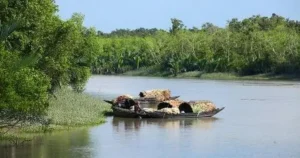
The International Union for Conservation of Nature (IUCN) has downgraded the conservation outlook for Sundarbans National Park from ‘Good with Some Concerns’ to ‘Significant Concerns’, indicating increasing environmental stress and management challenges.
Key Facts about Sundarbans National Park:
| Feature | Details |
|---|---|
| Location | Southeastern West Bengal, near Kolkata |
| Established | 1973, under Project Tiger |
| Designation Timeline | UNESCO World Heritage Site – 1987 UNESCO Biosphere Reserve – 2001 Ramsar Site – 2019 |
| Biome Type | Mangrove forest in the Gangetic Delta |
| Notable Species | Royal Bengal Tiger (flagship species), Fishing cats, Pangolins |
| Key Flora | Sundari Tree, Golpati, Genwa, Hatal, Dhundul |
| Major Rivers | Ganga, Brahmaputra, Meghna – forming a vast estuarine ecosystem |
Reasons for Downgraded Conservation Status (IUCN Report):
| Issue | Description |
|---|---|
| Rising Sea Levels & Salinity | Due to climate change and melting glaciers, affecting both flora and fauna |
| Cyclonic Activity | Recurrent cyclones (e.g., Amphan, Yaas) damaging habitat and displacing wildlife |
| Human Encroachment | Increased pressure from population growth and tourism |
| Pollution | Marine and riverine pollution affecting aquatic and mangrove biodiversity |
| Erosion & Habitat Loss | Constant shoreline erosion degrading tiger and bird habitats |
| Inadequate Management | Gaps in enforcement, monitoring, and community engagement |
Ecological Significance of Sundarbans:
-
Largest Mangrove Forest in the World
-
Natural Carbon Sink – helps mitigate climate change
-
Crucial Tiger Habitat – the only mangrove ecosystem where tigers are found
-
Migratory Bird Haven – important stopover for avian species
-
Natural Disaster Barrier – protects inland areas from storm surges and cyclones
Conservation Concerns Going Forward:
| Concern | Implication |
|---|---|
| Climate Change Impact | Long-term threat to freshwater balance and biodiversity |
| Loss of Keystone Species | Would destabilize the entire food web of the region |
| Rural Livelihoods at Risk | Fishing, honey collection, and farming face increased uncertainty |
| International Reputation | Downgraded status may affect global conservation funding and support |
Way Forward for Conservation:
-
Strengthen community-based conservation models (involving locals)
-
Improve cyclone resilience infrastructure and early warning systems
-
Enforce stricter controls on tourism and developmental activities
-
Promote mangrove afforestation and habitat restoration
-
Integrate climate adaptation into conservation plans
Exam Connect – Possible Questions
Prelims
1. The Sundarbans National Park is located in which type of ecosystem?
A. Tropical rainforest
B. Coral reef
C. Mangrove forest
D. Temperate grassland
Answer: C. Mangrove forest
2. Which of the following international designations apply to the Sundarbans National Park?
1.UNESCO World Heritage Site
2.Ramsar Wetland Site
3.World Network of Biosphere Reserves
4.Man and the Biosphere (MAB) Reserve
A. 1 and 2 only
B. 1, 2, and 3 only
C. 1, 2, 3, and 4
D. 2 and 4 only
Answer: C. 1, 2, 3, and 4
Mains
1. Discuss the environmental significance of the Sundarbans National Park and the reasons behind its declining conservation status as reported by IUCN.
2. Suggest a comprehensive conservation strategy to restore the ecological integrity of the Sundarbans, considering the challenges posed by climate change and human pressures.
5. RRI Develops Quantum Randomness Certification Using One Qubit – Science & Technology

Why in News?
The Raman Research Institute (RRI) in Bengaluru has developed a novel technique to certify quantum randomness using only one qubit, based on the Leggett–Garg Inequality (LGI) — verified on a cloud-based IBM quantum computer. This is a breakthrough in affordable and accessible quantum security.
Key Takeaways:
| Feature | Details |
|---|---|
| Institution | Raman Research Institute (RRI), Bengaluru |
| Technology Used | Leggett–Garg Inequality (LGI) test on a single qubit |
| Platform | IBM’s cloud-based quantum computer |
| Purpose | To certify true quantum randomness, not hardware or noise-induced |
| Implication | Makes affordable, certified randomness accessible to researchers and institutions globally |
| Significance | Critical boost for cybersecurity, data encryption, and scientific research |
Understanding Key Concepts:
What is Quantum Randomness?
-
Quantum randomness arises from the inherent uncertainty of quantum mechanics.
-
Unlike classical or pseudorandom generators (which use algorithms), quantum randomness is truly unpredictable.
-
Used in high-security applications (e.g., encryption, cryptographic keys).
What is a Qubit?
-
Qubit is the basic unit of quantum information (quantum analog of a bit).
-
Can exist in a superposition of 0 and 1, unlike classical bits which are either 0 or 1.
What is Leggett–Garg Inequality (LGI)?
-
A test to check whether a system behaves classically or quantum mechanically.
-
Involves measuring a system at multiple times to detect “quantumness.”
-
Violation of LGI implies that the system exhibits non-classical (quantum) behavior.
Why Randomness Certification Matters:
| Application Area | Importance |
|---|---|
| Cybersecurity | Secure encryption requires truly random keys |
| Scientific Simulations | Eliminates bias from predictable patterns |
| Quantum Cryptography | Essential for quantum key distribution (QKD) |
| Cloud Computing | Ensures secure, decentralized computation |
| Public Key Infrastructure (PKI) | Prevents attacks based on pattern prediction |
Benefits of RRI’s Innovation:
| Advantage | Description |
|---|---|
| Low Resource Requirement | Uses just one qubit — highly efficient |
| Cloud-Accessible | Can be implemented remotely by researchers globally |
| Cost-Effective | Reduces the need for expensive quantum hardware |
| Supports India’s Quantum Mission | Aligns with national goals in quantum tech & cybersecurity |
Exam Connect – Possible Questions
Prelims
1. What does a violation of the Leggett–Garg Inequality (LGI) indicate about a system?
A. The system behaves according to classical physics
B. The system is non-deterministic due to hardware noise
C. The system displays quantum behavior
D. The system is not measurable
Answer: C. The system displays quantum behavior
2. Which Indian institution recently developed a quantum randomness certification method using only one qubit?
A. IISc Bengaluru
B. Indian Institute of Astrophysics
C. Raman Research Institute
D. TIFR Mumbai
Answer: C. Raman Research Institute
Mains
1. Explain the significance of quantum randomness in modern digital security. How does the recent breakthrough by the Raman Research Institute contribute to this field?
2. What is the Leggett–Garg Inequality and how does its application help in distinguishing quantum systems from classical ones? Discuss with reference to India’s advancements in quantum technology.
